
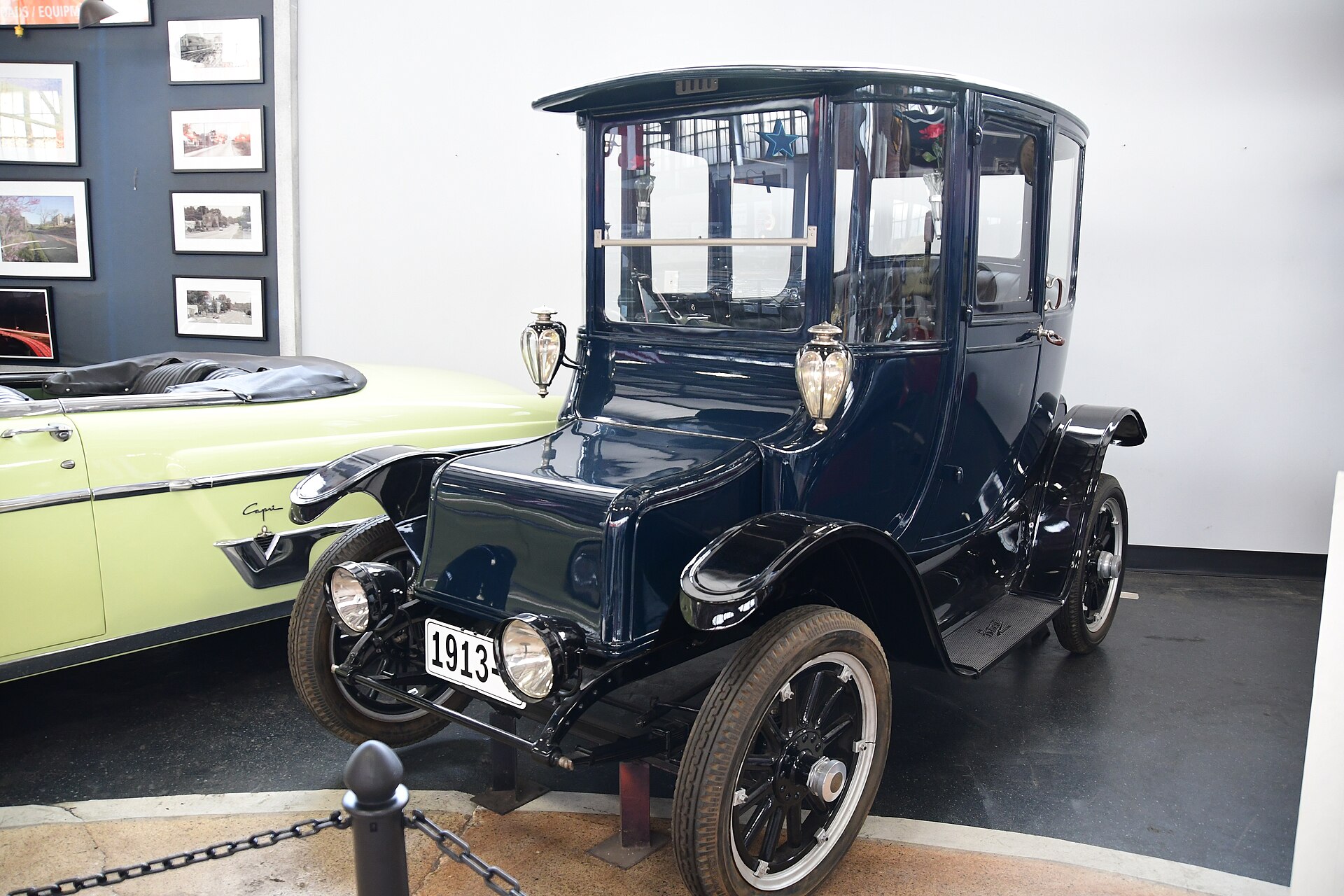
Ask most people when the electric car was invented and they will name a company founded in the twenty-first century. The real answer is far older. Electric cars were rolling down city streets before the Wright brothers flew, and around 1900 they were among the most popular automobiles in America. Then, within a few decades, they nearly vanished, only to return a century later as the future of transportation. This is the electric car paradox, and it holds some of the most valuable lessons any inventor can learn.
Key points
- Electric vehicles existed more than 100 years ago and were popular in American cities around 1900.
- They lost to internal combustion because of range, cheap oil, the electric starter, mass production and missing infrastructure, not because the idea was bad.
- The modern revival depended on better batteries, policy, charging networks and companies with the scale to build and sell cars.
- For inventors, the lesson is that timing, infrastructure, cost and market power can matter as much as the invention itself.
- Choosing the right partner can supply what an invention lacks on its own.
A brief history of the first electric age
Early experiments
The story begins with nineteenth-century tinkerers. In the first half of the 1800s, inventors in Britain, the Netherlands and the United States built crude electric carriages and models powered by non-rechargeable batteries. The U.S. Department of Energy credits Robert Anderson with one of the first crude electric carriages. These machines were curiosities rather than practical vehicles, because a battery that could not be recharged was an expensive way to travel a short distance.
The breakthrough was the rechargeable battery. French physicist Gaston Planté invented the lead-acid battery in 1859, and Camille Faure significantly improved it in 1881, making it far more practical to manufacture and use. In 1881 Gustave Trouvé demonstrated an electric tricycle in Paris. Within a decade, electric road vehicles were being built in several countries.
America’s electric moment
In the United States, William Morrison, a chemist from Des Moines, Iowa, is credited with one of the first successful electric cars, around 1890. It was essentially an electrified wagon that could carry several passengers, but it sparked public interest. Over the following years, electric taxicabs operated in New York, and manufacturers such as Baker and Detroit Electric built elegant city cars.
In 1899, the Belgian driver Camille Jenatzy’s electric car La Jamais Contente became the first road vehicle to exceed 100 kilometers per hour. Electric vehicles were not slow novelties; for a time they held the land speed record.
By around 1900, according to the U.S. Department of Energy, electric cars accounted for about a third of the vehicles on American roads. Their advantages were obvious to city drivers. They were quiet, did not vibrate or smell, required no gear shifting, and started instantly. Gasoline cars of the era had to be cranked by hand, a strenuous and sometimes dangerous task, and steam cars could take a long time to build up pressure.
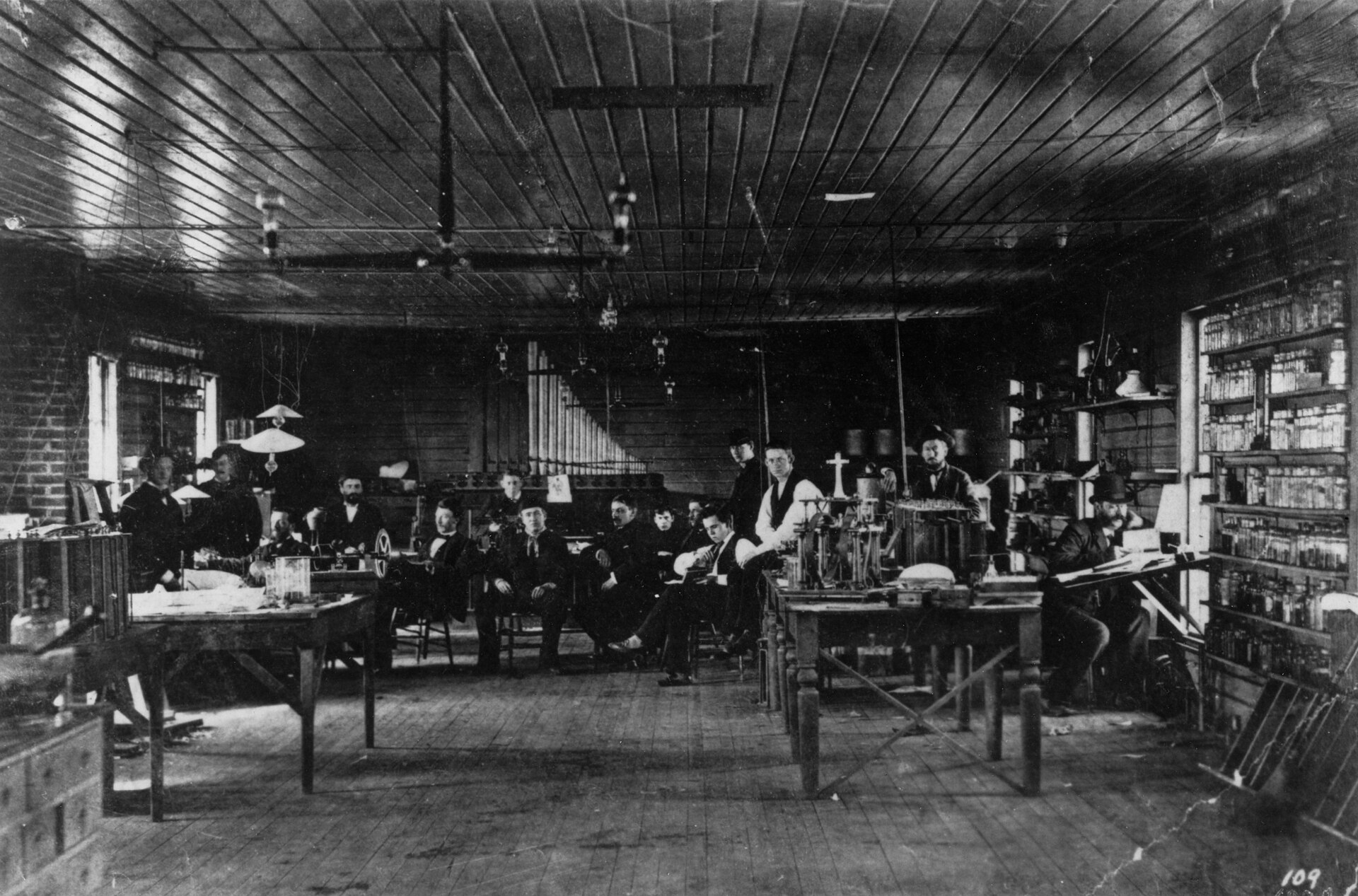
Even Thomas Edison believed in the electric car. He spent years developing a nickel-iron battery intended for vehicles. The enthusiasm was real, the technology worked, and customers were buying.
Why electric cars lost the first round
If electric cars were so attractive, why did they almost disappear by the 1930s? The answer is not a single failure but a convergence of forces, most of them outside the control of any individual inventor.
1. Range and charging
Early batteries were heavy and stored relatively little energy. That was fine for trips around town, but America was building roads between cities. As the road network grew, drivers wanted to travel farther than a battery could take them, and recharging took hours. Refueling a gasoline car took minutes.
2. Infrastructure that did not exist
Electricity itself was the problem. In the early twentieth century, much of rural America had no electrical service. A gasoline car could be refueled from a can carried in the back or bought at a general store. An electric car needed a grid. The infrastructure for electric vehicles lagged far behind the vehicles themselves.
3. Cheap oil
Major oil discoveries, beginning with the Spindletop gusher in Texas in 1901 and followed by further Texas strikes, made gasoline abundant and inexpensive. The Department of Energy notes that Texas crude made gasoline cheap and widely available, including for rural Americans. When fuel is cheap and everywhere, the efficiency of the electric motor matters less to the buyer.
4. Mass production and price
Henry Ford introduced the Model T in 1908, and his moving assembly line steadily drove its price down. The Department of Energy reports that by 1912 a gasoline car cost about $650, while an electric roadster sold for about $1,750. For most families, that difference settled the question.
5. The electric starter
Perhaps the cruelest irony is that electricity helped kill the electric car. In 1912 Charles Kettering’s electric self-starter appeared on Cadillac automobiles, eliminating the hand crank. One of the electric car’s strongest selling points, easy starting, was now available on gasoline cars too.
6. Market power and momentum
Once gasoline cars became dominant, a self-reinforcing system grew around them: filling stations, oil companies, repair shops, parts suppliers and road-building programs. Each new gasoline car made the next one more convenient to own. Electric vehicles, by contrast, became a shrinking niche. By the mid-1930s, according to the Department of Energy, they had all but disappeared from American roads.
| Factor | Electric car around 1900–1915 | Gasoline car around 1900–1915 |
|---|---|---|
| Starting | Instant, no crank | Hand crank until the 1912 electric starter |
| Noise and odor | Quiet and clean | Loud, vibrating, exhaust fumes |
| Range | Suited to city trips | Longer trips between towns |
| Refueling | Hours of charging; needed grid access | Minutes; fuel could be carried |
| Price | Higher (about $1,750 for a roadster in 1912, per DOE) | Falling fast (about $650 by 1912, per DOE) |
| Supporting system | Limited to electrified cities | Rapidly growing oil and service network |
The modern return
Electric vehicles never died entirely; they survived in niches such as delivery vehicles, forklifts and golf carts. Interest revived during the oil shocks of the 1970s and grew again in the 1990s, partly in response to clean-air regulation. General Motors leased the EV1 in the late 1990s, and Toyota launched the Prius, the first mass-produced hybrid, in Japan in 1997 and worldwide in 2000.
The decisive change was the battery. Lithium-ion cells, commercialized for consumer electronics in the early 1990s, became steadily cheaper and more energy-dense as production scaled up for laptops and phones. That gave carmakers a power source that could deliver acceptable range. Tesla’s Roadster arrived in 2008, and the Nissan LEAF and Chevrolet Volt reached American buyers in late 2010. Charging networks, government incentives and emissions rules followed, and the market began to grow quickly.
The electric motor had not changed in its fundamentals. What changed was everything around it: battery chemistry, manufacturing scale, charging infrastructure, public policy, fuel-price concerns and consumer attitudes. The idea that lost in 1915 won in the 2010s because the ecosystem finally caught up.
Lessons for today’s inventors
Lesson 1: Timing is a strategic variable, not luck
An invention can be right too early. Before you commit everything to launch, ask whether the components, materials, regulations and customer habits your product depends on are ready. If they are not, the right strategy may be to protect the invention, keep developing it and look for a partner who can wait for or create the right moment. Remember that a patent generally lasts 20 years from filing, so the clock starts running whether or not the market is ready. Our guide to why most patents fail commercially looks at this risk in detail.
Lesson 2: Infrastructure decides adoption
Many inventions need something else to exist first: a charging network, a software platform, a certification standard, a trained workforce. If your product depends on infrastructure you cannot build, your realistic path to market probably runs through a company or industry that already controls that infrastructure.
Lesson 3: Cost and manufacturing scale beat elegance
The early electric car was in many ways the more refined product. It lost on price, because Ford mastered production at scale. Inventors should think about manufacturability early, ideally while moving from idea to prototype, and should recognize that scale usually belongs to established manufacturers.
Lesson 4: Incumbents adapt
The electric starter shows how an incumbent technology can absorb a rival’s best feature. Expect established players to respond to your innovation, sometimes by improving their own products, sometimes by acquiring or sidelining the challenger. A defensible patent position and a well-chosen ally reduce that risk.
Lesson 5: Consumer choice follows convenience
Buyers did not reject the electric car on principle; they chose what was cheaper and more convenient for the trips they wanted to take. Understand the whole customer experience, including fueling, maintenance, resale and service, not just the product’s technical merits.
Lesson 6: Market power is real, so partner with it
The gasoline car’s victory was reinforced by oil companies, road builders and manufacturers whose interests were aligned. An independent inventor rarely has that kind of power. This is the central insight behind the Pre-Patent Pre-Partnering strategy: rather than entering a market dominated by entrenched systems alone, the inventor’s company seeks a suitable, committed major partner whose resources and infrastructure can carry the invention to customers.
What the early pioneers could not control
It is tempting to judge the early electric car makers harshly, but most of the forces that defeated them were beyond any single company’s reach. No battery maker of 1910 could electrify rural America, lower the price of crude oil or match the purchasing power behind Ford’s assembly line. What the pioneers could influence was narrower: which customers they targeted, which allies they cultivated and how they used the years in which their technology was protected and in demand.
Some electric makers did find a profitable niche, selling to wealthy urban buyers who valued quiet and cleanliness, and commercial fleets of electric delivery trucks operated in some cities for years. But a niche without a growing supporting system tends to shrink. The same pattern appears in many industries today: a technically superior product holds a loyal corner of the market while the mainstream organizes itself around a rival. The question for a modern inventor is whether there is a partner whose own interests are served by building the supporting system your invention needs.
A readiness checklist inspired by the electric car
- What enabling technologies does my invention depend on, and are they mature and affordable?
- What infrastructure must exist for customers to use it, and who controls that infrastructure?
- How will my cost compare with the incumbent once the incumbent responds?
- Who can manufacture at scale, and on what terms?
- Which established companies benefit if my invention succeeds, and which lose?
- If the market is not ready, how will I protect and sustain the invention until it is?
You can test your answers with our invention readiness check.
Conclusion
The electric car paradox reminds us that history does not always reward the best idea first. It rewards the idea that arrives with the right infrastructure, the right cost, the right partners and the right timing. Inventors who study the century-long journey of the electric car can avoid repeating its first defeat, and position their own inventions for the kind of comeback that eventually came.
Is your invention ahead of its market? We help inventors assess timing, infrastructure and partnering options before going to market. Contact us by email to start a confidential conversation.