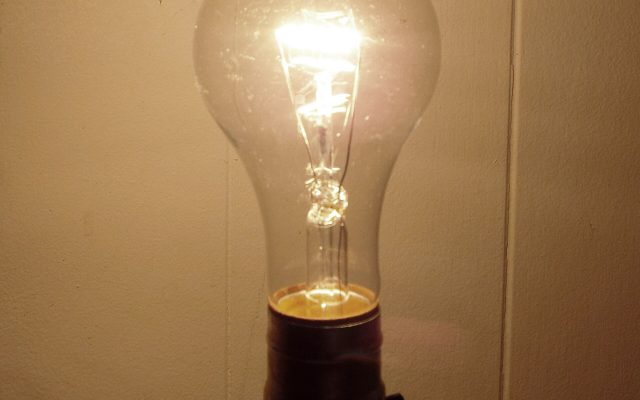

Why do some nations grow richer decade after decade while others stall? Economists offer many answers, but nearly all of them return to one engine: new ideas turned into useful products and processes. Patent policy sits at the heart of that engine. It decides who is rewarded for inventing, how knowledge is shared, how easily small inventors can reach the market, and how much power accumulates in a few large companies. On this site we use the term Super Economy for an economy that gets these choices right. This article explains the concept, the economics behind it, and the policy proposal that grew out of it.
Key points
- Technological progress is a major source of long-run growth in living standards, a finding central to modern growth economics.
- Patent systems exist to encourage invention and disclosure, a bargain dating back to the Venetian Patent Statute of 1474.
- Small and independent inventors are an important, often underused, source of new ideas.
- From our perspective, concentration of market power can narrow the paths by which outside inventions reach customers.
- The site owner has proposed a “Pre-patent Registry and silent Trading-Post” to operate alongside national patent offices.
- Governments can strengthen growth by making patent systems more accessible, predictable and connected to industry.
Innovation and growth: what economics tells us
For most of human history, living standards barely changed from one generation to the next. The sustained rise in prosperity since the Industrial Revolution coincided with an unprecedented stream of inventions: steam power, electricity, the telephone, the automobile, the computer. Economists have tried to measure how much of that growth comes from technology.
In the 1950s, Robert Solow’s growth model showed that adding more workers and more machines could not by itself explain the long-run rise in output per person; a large residual was attributed to technological progress. Later, Paul Romer’s endogenous growth theory placed ideas inside the model, arguing that knowledge differs from ordinary goods because it can be used by many people at once and builds on itself. Romer shared the 2018 Nobel Memorial Prize in Economic Sciences for this work. The economist Joseph Schumpeter, writing in 1942, described the process as “creative destruction,” in which new innovations displace old products and firms.
The policy message is consistent: an economy that produces, protects and deploys more good ideas tends to grow faster. Patent policy is one of the main levers a government controls in that process.
The original patent bargain
The modern patent idea is often traced to the Venetian Patent Statute, passed by the Venetian Senate on 19 March 1474. Venice offered inventors of new and ingenious devices a ten-year exclusive right, provided the device was reduced to practice, and it did so explicitly to attract talent and encourage useful industry. England’s Statute of Monopolies of 1624 curbed royal monopolies while preserving patents for new inventions. The United States wrote the principle into its Constitution, empowering Congress “to promote the Progress of Science and useful Arts,” and passed its first Patent Act in 1790.
The bargain has remained remarkably stable: the state grants a temporary, limited right to exclude others, today generally 20 years from filing, and in return the inventor discloses the invention so that others can learn from it and build on it once the term ends. The bargain serves the economy when it rewards genuine inventors, spreads knowledge and gets inventions into use. It fails the economy when rights become too expensive to obtain, too uncertain to rely on, or too easily captured by those with the most resources. Our patent history timeline traces how the system has evolved.
The role of small and independent inventors
Many celebrated inventions came from individuals or small teams working outside large organizations. Independent inventors bring a different perspective: they are not bound by a company’s existing product lines, and they often attack problems that large firms have overlooked or deliberately avoided because a new solution would compete with their established business.
Yet independent inventors face steep disadvantages. They must pay for patent drafting, filing, prosecution and maintenance, often in several countries. They must build prototypes, find manufacturers, and enter markets where established competitors control distribution. Commonly cited estimates suggest only a small percentage of patents ever achieve commercial success; this site has long cited a figure of less than about 2 percent. Our article on why most patents fail commercially explores the reasons. Each invention that never reaches the market is a lost contribution to national output, employment and tax revenue.

Concentration and monopoly: a perspective
A patent is a narrow right covering a specific invention. Market dominance is something different: a position in which a few firms control much of an industry’s customers, platforms or supply chains. The two can interact in ways that matter for growth.
From this site’s perspective, the decades since the 1980s have seen several large technology companies, such as Microsoft, Apple and Google, achieve exceptional scale and influence. These firms have produced important innovations and have also acquired many smaller companies. Our concern is a structural one: when the main route to market for an outside invention is to be acquired by a dominant incumbent, the incumbent effectively decides which ideas are developed, which are absorbed, and which are shelved. That can narrow the diversity of innovation an economy depends on. We also take the view that changes to the U.S. system, including the America Invents Act of 2011 and the post-grant challenge procedures of the Patent Trial and Appeal Board that began in 2012, have shifted the balance of cost and risk in ways that independent inventors must take seriously.
Reasonable people disagree about these questions, and competition policy, through laws such as the Sherman Antitrust Act of 1890, exists precisely to weigh them. The point for policymakers is that patent policy and competition policy should be designed together, so that patents remain a path for outsiders to challenge incumbents rather than a tool that only incumbents can afford to use.
The site owner’s proposal: a Pre-patent Registry and silent Trading-Post
The Super Economy concept is not only an analysis; it led to a concrete proposal. As a volunteer lobbyist for the regional inventors society in his Canadian province, the site’s owner, Amnon, met leaders in government, industry and education, including the USPTO. He prepared proposals to the Federal and Provincial governments in Canada and to the USPTO for what he calls a “Pre-patent Registry and silent Trading-Post” to operate alongside national patent offices.
In broad terms, the proposal addresses a gap in today’s systems. Patent offices examine and grant rights, but they do not help inventors find the industrial partners who can turn those rights into products. Inventors are left to search alone, often after spending heavily on filings and before they understand the realities of their industry. The proposal envisions:
- A Pre-patent Registry: a way for inventors to register inventions at an early stage, establishing a record of their work and readiness before they commit to the full cost and risk of going to market.
- A silent Trading-Post: a discreet channel through which suitable partners and investors can learn of registered inventions and approach the inventors, without public exposure that might invite copying.
- Alignment with the Pre-Patent Pre-Partnering approach: encouraging inventors to find a committed major partner when the project is ready, rather than building a startup simply to be acquired.
The details of how such a mechanism would operate, including confidentiality rules, eligibility, governance and its relationship to existing patent law, are matters for policymakers and legal experts to work out. We present it here as the owner’s proposal and as an invitation to discussion. More background is available on our related site, Wisdom for Government & Industries.
Two paths for the same invention
The difference the proposal aims to make is easiest to see by comparing the typical path an independent inventor follows today with the path the Super Economy concept envisions. The comparison below is illustrative, not a description of any existing program.
| Stage | Typical path today | Super Economy path (as proposed) |
|---|---|---|
| Early invention | Inventor works alone, unsure whom to trust | Invention recorded in a pre-patent registry |
| Finding interest | Cold approaches to companies; risk of exposure | Discreet introductions through a silent trading post |
| Patent spending | Heavy filings before market interest is known | Filing strategy informed by a committed partner’s needs |
| Going to market | Alone, with an investor, or groomed for takeover | With a suitable, committed major partner |
| Economic result | Many inventions stall unused | More inventions reach productive use |
Precedents for policy that connects invention to use
Governments have intervened before to move inventions from paper into practice. In the United States, the Bayh-Dole Act of 1980 allowed universities, nonprofits and small businesses to retain title to inventions made with federal research funding, on the theory that ownership would motivate them to license and commercialize those inventions. Universities responded by building technology transfer offices that actively seek industry partners. Many countries also support innovation through research grants, small business programs and public-private partnerships, and organizations such as WIPO publish comparative measures of national innovation performance each year. Independent inventors, however, generally fall outside these institutional channels. A registry and trading post designed for them would extend the same logic of connecting inventions with the partners who can use them.
Recommendations for governments
Drawing on the Super Economy perspective, here are policy directions we believe deserve serious consideration. They are offered as recommendations for discussion, not as claims about any government’s current plans.
- Keep the original mandate in view. Measure the patent system not only by applications processed but by inventions brought into productive use.
- Lower barriers for small entities. Maintain and expand reduced fees, free guidance and pro bono programs for independent inventors and small businesses.
- Make outcomes predictable. Clear examination standards and stable rules reduce the uncertainty that discourages investors from backing small inventors.
- Balance post-grant challenges. Ensure that procedures for reviewing patents are fair to owners with limited resources, not only to challengers with large legal budgets.
- Support the path from idea to prototype. Grants, shared workshops and testing facilities help inventions reach the stage where partners take them seriously.
- Build bridges to industry. Pilot mechanisms, such as a pre-patent registry or a confidential partnering platform, that connect inventors with committed industrial partners.
- Coordinate patent and competition policy. Review whether acquisition patterns and market concentration are narrowing the routes by which outside inventions reach customers.
- Measure and publish results. Track commercialization outcomes for small-entity patents so policy can be improved over time.
What this means for inventors and investors today
Policy changes slowly. While governments deliberate, inventors and investors can apply the Super Economy logic at the level of a single project: protect the invention properly, develop it to a credible prototype, assess the industry realistically, and seek a suitable major partner rather than entering a hostile market alone. Our Pre-Patent Pre-Partnering strategy guide shows how.
This article presents analysis and opinion for educational purposes. It is not legal or investment advice; consult qualified professionals for decisions about specific inventions or investments.
Are you a policymaker, industry leader or inventor interested in the Super Economy and the Pre-patent Registry proposal? We welcome the conversation. Contact us by email to get in touch.