

Most inventors are told to follow the same script: file a patent, raise money, build a startup, and hope a large company buys it. Pre-Patent Pre-Partnering offers a different path. It asks the inventor to set a realistic business strategy for the industry before going to market, to prepare the invention so it is genuinely ready, and then to bring on a suitable, intrigued and committed major partner who can carry it to scale. This guide walks through the full process, step by step.
Key points
- Start with the industry, not the patent: understand who controls manufacturing, distribution and customers.
- Decide your business strategy before filing, because the strategy shapes what, where and when you file.
- Document conception and keep the invention confidential until your filing and agreements are in place.
- Approach partners only when the project is ready, with a working prototype and a clear business case.
- Time patent filings with partner discussions so key deadlines, such as the 12-month provisional window, work for you.
What Pre-Patent Pre-Partnering means
The phrase sounds technical, but the idea is simple. “Pre-patent” means the strategic thinking happens before you commit heavily to patent spending. “Pre-partnering” means you plan, from the beginning, to work with a major industry partner rather than treating partners as an afterthought or as eventual acquirers.
The approach grows out of the original purpose of patents. The Venetian Patent Statute of 1474 rewarded inventors so that useful devices would be built and used for the benefit of the commonwealth. Pre-partnering tries to keep both halves of that bargain intact: the invention reaches the market, and the inventor shares fairly in the value it creates.
It is not the only valid route. An inventor who is confident in the market and not threatened by IP piracy or infringement may go to market alone or with an investor. Our comparison of startup-to-exit versus pre-partnering explores when each path fits.
The ten steps at a glance
- Analyze the industry.
- Set the business strategy before filing.
- Create evidence of conception.
- Protect confidentiality.
- Reach genuine readiness.
- Target potential partners.
- Make the approach.
- Negotiate the partnership.
- Time your filing strategy with the partner.
- Go to market together.
Step 1: Analyze the industry
Every industry has its own economics. Before thinking about claims or prototypes, map how value moves through your sector. Ask:
- Who are the dominant manufacturers, suppliers, distributors and customers?
- How long are product development and certification cycles? Maritime, medical and automotive products, for example, often face long approval timelines.
- How capital-intensive is production? Could a small company realistically manufacture at scale?
- How have incumbents historically treated outside inventions: licensing, acquisition, imitation or indifference?
- How easy would your invention be to copy once it is visible in the market?
The answers tell you whether a small company can win alone or whether the realistic route to market runs through a major player. In concentrated industries the second answer is common, and it is better to know it on day one than to discover it after spending your savings.
Step 2: Set the business strategy before filing
Patent strategy should follow business strategy, not the other way around. Your filing choices, including which countries, how broad the claims, and whether to file provisionally first, depend on who will make and sell the product and where. Decide early which of these models you are pursuing:
| Model | Who brings it to market | Best suited to |
|---|---|---|
| Go it alone | The inventor’s company | Low capital needs, accessible customers, low copying risk |
| Inventor plus investor | The inventor’s company, funded | Strong market confidence, scalable production, defensible IP |
| Pre-partnering | The inventor’s company with a major partner | Concentrated industries, high capital needs, high piracy risk |
| Startup-to-exit | An acquirer, after a sale | Founders seeking an exit more than ongoing participation |
Write the chosen strategy down in a short business plan. It will evolve, but it will keep every later decision consistent.
Step 3: Create evidence of conception
Since the America Invents Act moved the United States to a first-inventor-to-file system for applications filed on or after 16 March 2013, dated notebooks no longer decide who gets the patent when two inventors compete. They still matter a great deal. Good records help prove that you are the true inventor, support a derivation claim if someone takes your idea and files first, clarify ownership among co-inventors, and reassure partners during due diligence.
- Keep a bound, page-numbered notebook or a secure digital log with reliable timestamps.
- Record sketches, calculations, test results and failures, with dates.
- Have a trusted, technically competent witness who has signed a confidentiality agreement review and sign key entries.
- Save design files, emails and prototype photos in an organized archive.
We cover practical record-keeping and early protection in more depth in protecting your idea before the patent.
Step 4: Protect confidentiality
Public disclosure before filing can be fatal. The US offers a one-year grace period for the inventor’s own disclosures, but many other jurisdictions, including Europe, generally require absolute novelty, meaning an earlier public disclosure can destroy your rights there. Treat the invention as confidential until a filing is on record and agreements are in place.
- Use written non-disclosure agreements with collaborators, contractors, testers and prospective investors.
- Share only what each person needs to know.
- Avoid trade shows, crowdfunding pages, publications and social media until you have filed.
- Mark confidential documents clearly and log who received what, and when.
Watch out for “idea submission” portals. Many large companies accept outside ideas only on terms that state the submission is not confidential and that no relationship is created. Read those terms carefully, and do not submit anything you have not already protected by filing.
Step 5: Reach genuine readiness
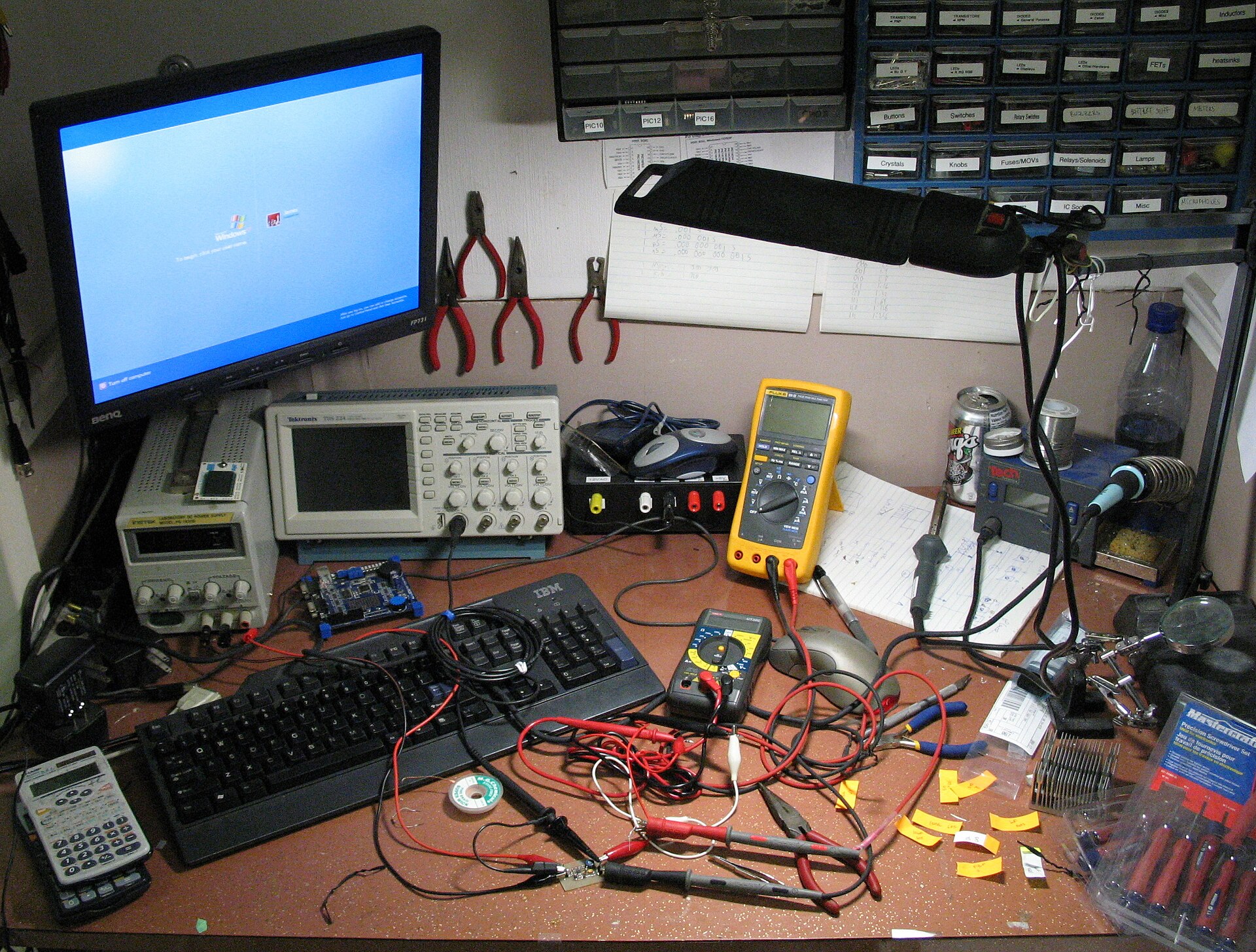
Major partners rarely commit to a concept. Ideas are cheap; what has value is an idea developed into a working prototype with credible evidence behind it. Before approaching anyone, assemble:
- A working prototype or proof-of-concept, with test data that shows performance against the current alternatives.
- A clear statement of the problem solved and the economic benefit to the partner’s customers.
- A cost estimate for manufacturing at scale, even if approximate.
- A summary of your IP position: filings, freedom-to-operate observations and any prior art you know about.
- An honest list of remaining technical and regulatory risks.
Our invention readiness check provides a structured way to assess where you stand before you spend a single meeting with a prospective partner. Be candid with yourself here: a partner’s engineers will find the weaknesses quickly, and it is far better that you find them first.
Step 6: Target potential partners
Build a shortlist using four criteria: the partner should be intrigued by the technology, interested in the market it serves, able to become committed with resources and a champion, and suitable in culture, capability and reputation. Look beyond the obvious market leader; ambitious challengers and specialized suppliers can be better partners than the largest firm. Our guide on how to find the right major partner explains mapping and due diligence in detail.
Step 7: Make the approach
First contact should be non-confidential. Prepare a one- or two-page summary that describes the problem, the benefit and the evidence without revealing how the invention works. Aim it at a decision-maker with responsibility for the relevant product line or strategy, ideally through a warm introduction from an industry association, a supplier or a mutual contact. If interest is real, move to a signed non-disclosure agreement before sharing technical details, and disclose in stages.
Step 8: Negotiate the partnership
Partnership structures range from licenses to joint ventures to development agreements with options. Our article on licensing versus joint venture versus assignment compares them. Whatever the form, negotiate these points carefully:
- Ownership of IP, including improvements made jointly or by the partner.
- Field and territory, so you can work with others outside the partner’s area.
- Diligence obligations, such as milestones and minimum commitments, so the invention is not shelved.
- Financial terms, including upfront payments, royalties, equity or profit share.
- Who pays for and controls patent prosecution and enforcement.
- Exit and reversion, so rights return to you if the partner does not perform.
Engage an experienced licensing or IP attorney before signing anything binding.
Step 9: Time your filing strategy with the partner
Patent deadlines can either pressure you or work for you. A common sequence looks like this:
- File a US provisional application before any non-confidential disclosure. It secures a filing date for 12 months at relatively low cost.
- Use those 12 months to refine the invention, approach partners and test the market under NDA.
- Before the 12 months end, file a nonprovisional application and, if international protection matters, a Patent Cooperation Treaty application or direct foreign filings claiming priority under the Paris Convention. A committed partner may fund or share these costs, and its markets can guide which countries to choose.
- The PCT route generally gives you until about 30 months from the earliest priority date to enter national phases, buying more time to align country selection with the partner’s plans.
Remember that a US utility patent generally lasts 20 years from the nonprovisional filing date, so filing far earlier than necessary can consume protection before sales begin. Balance that against the risk that someone else files first. A registered patent attorney or agent should plan these dates with you.
The core insight: in pre-partnering, the patent is a tool in a business plan, not the plan itself. File to protect the negotiation and the market you and your partner will actually serve.
Step 10: Go to market together
Signing is the beginning, not the end. Keep the partnership productive by agreeing on a joint launch plan, clear roles for engineering, manufacturing and sales, and regular review meetings tied to the milestones in your agreement. Continue improving the invention, and file on meaningful improvements so your company keeps contributing value. Track royalties and performance carefully, and keep your own records of every technical contribution.
An illustration from the maritime sector
Consider how these steps apply in a capital-intensive industry. This site’s sponsoring corporation, Superior Hulls Inc. (Canada/Israel), works on maritime innovation built around injecting air beneath ship hulls to improve economy, performance, comfort, safety and speed. Shipbuilding is a textbook case for pre-partnering: hulls are built by a limited number of yards, vessels take years to design and certify, and a small company cannot realistically build fleets on its own. Rather than positioning itself for a takeover, the company’s stated aim is to find a wise major maritime partner. The same industry analysis, readiness work and partner targeting described above apply directly.
Common mistakes to avoid
- Spending heavily on worldwide patents before you know who will commercialize the invention.
- Pitching a concept without a prototype or data.
- Disclosing details before filing or before an NDA is signed.
- Approaching only the single largest company in the industry.
- Accepting an assignment of all rights when a license with diligence terms would protect you better.
- Letting the 12-month provisional deadline pass while negotiations drag on.
Educational content, not legal advice. Patent deadlines and disclosure rules differ by country and change over time. Consult a registered patent attorney or agent for advice on your specific invention.
Start your pre-partnering plan
Pre-Patent Pre-Partnering rewards inventors who think like business strategists early. If you would like help evaluating your industry, readiness or partner options, review our services or contact us by email at [email protected] to arrange a first conversation.